Writing e-mails. How to start an e-mail
Sonido
How to start an e-mail
Writing e-mails is an increasingly important aspect of e-commerce. An e-mail must have a good reason for being sent; otherwise it's better to not send it.
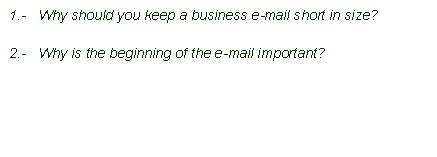
Keep the e-mail short. From the subject line to the farewell, the e-mail should offer the reader the most relevant information in as few words as possible.
Customers are busy, and many feel overwhelmed by a long e-mail. Messages that are short and to the point are more likely to be read.
- Do choose words carefully.
- Don't think that having a lot of space means that you should use it all.
State the most important things first
Customers will start reading an e-mail from the beginning and read the introduction to see if it's worth spending more of their time. Readers tend to pay less and less attention to what is written as they scan more quickly through the rest of the e-mail.
To make sure customers read the most relevant information, put the most important information at the top, followed by the most important supporting information. Each successive paragraph will receive less and less of the reader's attention and should contain less and less important information.
First line of the e-mail
A bad first line of an e-mail will be the only part of the e-mail the customer reads. However, a strong and informative first line, clearly stating the benefit of reading the full e-mail, will increase the chance that more customers will at least scan most of the message.
Questions
(Haga doble click sobre las preguntas para ver las respuestas; un click vuelve a posición original)