Friends Together
1.- Vocabulary – Food
Fruit (fruta)
Apple: manzana
Banana: plátano
Grapes: uvas
Lemon: limón
Lime: lima
Melon: melón
Orange: naranja
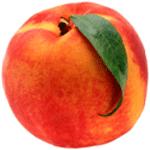
Peach: melocotón
Pear: pera
Pineapple: piña
Strawberry: fresa
Raspberry: frambuesa
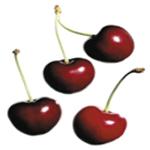
Cherry: cereza
Vegetables (verduras)
Asparagus: espárrago
Broccoli: brócoli
Cabbage: col
Cauliflower: coliflor
Green beans: judías verdes
Garlic: ajo
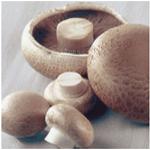
Mushrooms: champiñones
Onion: cebolla
Peas: guisantes
Pepper: pimiento/pimienta
Potato: patata
Sweetcorn: maíz dulce
Salad (ensalada)
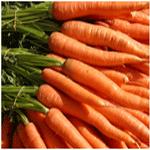
Carrot: zanahoria
Cucumber: pepino
Tomato: tomate
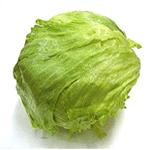
Lettuce: lechuga
Olives: aceitunas
Olive oil: aceite de oliva
Vinegar: vinagre
1.A.-Practice
Label the following food
1) 
2) 
3) 
4) 
5) 
2.- Grammar: Some / Any
Some
We use some with plural nouns.
- Some apples
- Some carrots
We use some with positive statements
- We have some strawberries.
- They have some potatoes.
Any
We use any with negative statements
- We don’t have any cabbages.
- They don’t have any olives.
We use any with questions
- Are there any cherries?
- Do you have any brothers or sisters?
2.A.- Practice
Complete the sentences with "some" or "any"
1) There are good restaurants in Twichenham. 2) There aren´t flowers shops in my town. 3) There are trees in the garden. 4) Are there books in the dining room? 5) Would you like sweet corn? 6) people eat a lot of chocolate.
3.- Grammar: Questions with Do
Verb - To do | |
| I | do |
| You | do |
| He / she /it | does |
| We | do |
| You | do |
| They | do |
Some questions are formed using a question word
Question word + auxiliary verb + subject + bare infinitive (without to)
Example:
- Where do you live?
Some questions are formed with the Auxiliary verb To do
Auxiliary verb + subject + bare infinitive (without to) + compliment
Example:
- Do you play tennis?
- Does he live in London?
3.A.- Fill in the gaps with the correct form of the verb to do
1) you eat fruit? 2) they play tennis? 3) he have a cat? 4) she cook every day? 5) I go to he gym on Tuesday?
4.- Grammar: Questions with Can
To be able to | |
| I | can |
| You | can |
| He / she /it | can |
| We | can |
| You | can |
| They | can |
Some questions are formed with the verb "to be able to".
Can + subject + bare infinitive (without to) + compliment
Example:
- Can you play the piano?
- Can he eat apples?
4.A.- Put the following questions with can into the correct order
1) today/they/can/play/outside? 2) bithday/make/can/John´s/cake/a/Sally/for? 3) night/can/party/I/go/on/to/the/Saturday?
5.- Grammar: Answering do and can questions
When you are asked a question with "do" or "can", the answer is very short.
- Do you play the piano? Yes, I do
- Do they sing? No, they don’t
- Can we go outside? Yes, you can
- Can they eat the cake? No, they can’t
5.A.- Answer the questions using short answers.
1) Do you speak French? 2) Can you ride a bike? 3) Does your mother work? 4) Can you see a computer?
6.- Reading
(Para ver la traducción hacer doble click en el texto; un click vuelve a posición original)
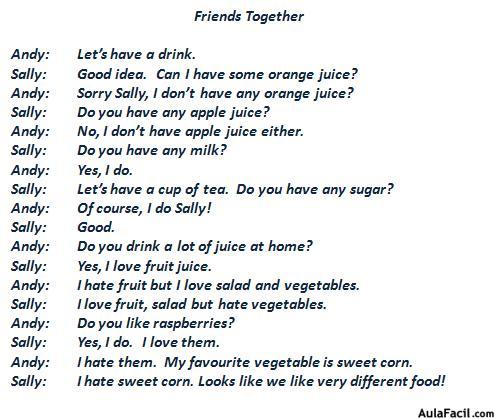
6.A.- Practice
6.A.1.- True or False.
1) There isn´t any milk. 2) There´s some orange juice. 3) Sally loves sweetcorn. 4) Andy has sugar. 5) Andy and Sally both like vegetables.
6.A.2.- Write the questions to the answers
1) Yes, I do have some sugar. 2) No, I don´t have any peach juice. 3) No, he doesn´t like raspberries. 4) Yes, she does like salad.