
Grammar: Will and Going to
Will and Going to
a) Form
1. "Will"
Form | Contraction | ||
I |
Will |
I'll | |
You |
Will |
You'll | |
He / she / it |
Will |
He'll / She'll / It'll | |
| We |
Will |
We'll | |
| You |
Will |
You'll | |
| They |
Will |
They'll |
2. "Going to"
Form | Contraction | ||
I |
am going to |
I'm going to | |
You |
are going to |
You're going to | |
He / she / it |
is going to |
He's / She's / It's going to | |
| We |
are going to |
We're going to | |
| You |
are going to |
You're going to | |
| They |
are going to |
They're going to |
b) Use
1. We use "will" when we make decision at the time of speaking. A decision that has not been decided before.Katie: Let's go out for dinner
Maria: That's a good idea. We'll go to the Chinese restaurant.
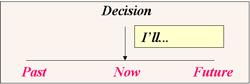
2. We use "going to" when we have already decided to do something.
(Maria and Katie have already decided to eat Chinese food)
Maria: Katie and I have decided to go out for dinner. We're going to eat Chinese.
James: That's nice.
Compare:
- "Manuel is in London". "Oh really? I didn't know. I'll phone him later"
- "Manuel is in London". "Yes, I know. I'm going to see him later"
3. We use "will" or "going to" when we are predicting what will happen:
- I think John will go to the party
- I think John is going to go to the party
4. We use "going to" when we use facts or events in the present situation as evidence for a prediction:
- It's going to rain
- Oh dear, I'm going to be late.
5. We use "going to" when something is clearly going to happen very soon and as a warning:
- Watch out, we're going to crash
- Be careful, you are going to drop those glasses
6. We use "will" when we are making a promise or an offer:
- I'll ring you later tonight
- I'll come round and help you later